
 Wibbo
When toddlers learn shapes.
On the milestone lists, shapes show up as sorting and drawing, not as words. The American Academy of Pediatrics says a childbegins to sort by shapes and colors by age two. That is the shape sorter and the puzzle board: matching, with no names needed.
Drawing comes next. The CDC'schecklist for three year olds says most children draw a circle "when you show him how." The AAP's list forthree to four year olds adds drawing circles and squares, and forfour to five year olds, copying a triangle and other geometric patterns.
None of the checklists linked here gives an age for naming shapes. So there is no date to hit. Sort, draw, and let the names come along the way. Every child moves at their own pace.
Five minutes, inside a normal day.
The CDC'stips for four year olds suggest asking about "the color, shapes, and size of things she sees during the day." For a toddler, you do the naming and they do the looking and touching:
- Find shapes on real things. The plate is a circle. The window is a square. The roof is a triangle. One shape a day is plenty.
- Let hands do it. Shape sorters, simple puzzles and blocks teach the difference between a circle and a square without a single word.
- Trace with a finger. Go around the edge of a plate or a book together. "Round and round. A circle." "Side, corner, side, corner. A square."
- Draw together. You draw a circle, they scribble next to it. Crayons, chalk, a stick in sand, a finger on a foggy window.
- Use snack time. Round crackers, square crackers, toast cut into triangles. "Do you want a circle or a square?"
Stop while it is still fun. Name shapes without testing them. "That's a circle" builds more than "What shape is this?" asked for the fifth time.
Which shapes first.
Start with the 8 shapes a child meets every day. Circle, square and triangle look the most different from each other, so they are the easiest three to begin with.
- Circle
- Square
- Triangle
- Rectangle
- Oval
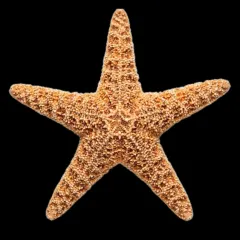
- Star
- Heart
- Diamond
These 12 can wait for the preschool years. They are in the same set for when your child starts asking.
- Pentagon
- Hexagon
- Octagon
- Crescent
- Cross
- Arrow
- Trapezoid
- Parallelogram
- Semicircle
- Ring
- Cube
- Pyramid
The20 printable shape cards show each shape as a flat, single-color drawing with its name. Free to print, no sign-up.
For how to use cards without turning them into a quiz, seehow to use flash cards with toddlers.
What not to worry about.
Calling a square a "box" or an oval an "egg" is normal, and rather smart. So is calling every shape a circle for a while. A triangle turned upside down may not look like a triangle to your child yet. Turn the card around sometimes and it will.
If you have questions about how your child is learning, your pediatrician is the right person to ask. Nothing on this page is medical advice.


